


http://energypost.eu/case-nord-stream-2/
The Polish side responded first on this issue. Polish national oil and gas company PGNiG said that it would sue the EC. The reaction of the Ukrainian side was though belated, but also sharp. The Ministry of Foreign Affairs and later the President of Ukraine reacted accordingly. Even before a formal decision of the European Commission, "Naftogaz of Ukraine" pointed to its negative consequences and losses for Ukraine.
But the decision was adopted. What are its fundamental consequences for the EU and Ukraine?
1. Practically, it is a powerful blow to the project of creation of the Energy Union, initiated by Poland, as the mechanism for energy solidarity in the EU. This Union will be meaningless under circumstances that violate basic principles of energy legislation, when for a stakeholder from outside the EU, which is totally and flagrantly ignores international law, the green light is turned on for further gas expansion. "One voice of the EU" in external energy policy, expected to be raised in the nearest future, is already dead. The potential of mistrust has been added to relations between the EU members in the energy sphere.
2. The decision of the EC paves the way for a similar solution, or "washing of hands" by Brussels about the issue of the project "Nord Stream-2". Although, there are rumors that Gazprom might abandon the project, however, nothing points to it. It has been only announced about the cancellation of the Shareholder Agreement, by means of which the European partners of "Gazprom" could help him financially in project realisation. Now "Gazprom" claims that it will do it on its own.
3. This decision confirms the assumption that Germany seeks to return to "business-as-usual" with Russia, ignoring the fact that the aggression of Russia against Ukraine continues, Russia is still holding the Crimea and the occupied territories in the Donbas. Although Russian gas trade does not suffer from EU sanctions against Russia, Germany (in order to return to the traditional business relations) is pushing through beneficial for itself and a number of Moscow-oriented Compromisers-countries those decisions that ostensibly have approval in the EU.
4. This decision is an unprecedented blow to the credibility of the European Commission, as Brussels appeared to be in the role of a kind of "stamp" in the hands of Berlin with the decision of the German energy regulator, which completely ignores the interests of other member countries, in particular of neighbouring Poland. This once again confirms that Germany has been transforming the common interests of the EU under its vision and interests, and has been increasing its dominance over other Member States.
5. The EC proceedings can be harmful to Ukraine both in financial terms through additional losses of gas transit volumes and revenues from it, and in terms of mutual trust for building and implementation of reforms in Ukraine based on the European model and energy legislation of the EU.
Take a look at the latter more closely. Article 274 "Cooperation in the sphere of use of infrastructure" of the Association Agreement clearly States: «The Parties shall endeavour to facilitate the use of gas transmission infrastructure and gas storage facilities and shall consult or coordinate, as appropriate, with each other on infrastructure developments. The Parties shall cooperate on matters related to trade in natural gas, sustainability and security of supply. With a view to further integrate markets of energy goods, each Party shall take into account the energy networks and capacities of the other Party when developing policy documents regarding demand and supply scenarios, interconnections, energy strategies and infrastructure development plans».
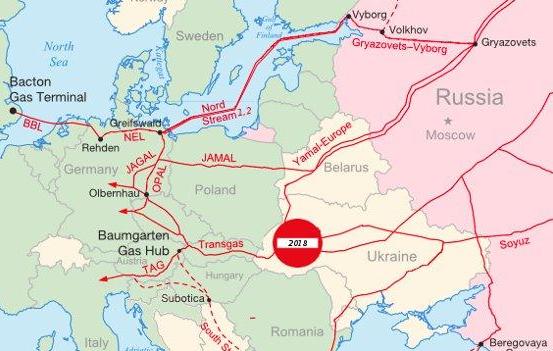
The above article of the Association Agreement is very important due to commitments, set up for both the EU and Ukraine with regard to cooperation in energy sector – to coordinate with each other plans, programmes, projects and to take into consideration existing capacities and potential, while implementing these or another projects. In the context of the European Commission decision on OPAL, it should consider that Ukrainian gas transportation system has around 50 per cent of overcapacities, potentially available for additional supplies of natural gas to European consumers. Only in case of lacking capacities in Ukraine the EC might take the decision in favour of Gazprom to increase its supply volumes.
Suddenly, the EC has “forgotten” provisions of its own documents, issued in February 2015 and February 2016, dedicated to the creation of the Energy Union, namely Energy Union Package. A Framework Strategy for a Resilient Energy Union with a Forward-Looking Climate Change Policy and Proposal for a Regulation of the European Parliament and of the Council concerning measures for safeguard of gas supply and repealing Regulation (EU) №994/2010. They provide for update and launching renewed strategic energy partnership with Ukraine. The EC decision on OPAL is neither a support to renew a strategic partnership, nor correspond to the core definition at all.
Ukrainian part should notify “hybrid friends” from Brussels, that it disclaims responsibility for ensuring further stable natural gas transit to the EU, given provisions for Gazprom for more utilization of Nord Stream – OPAL instead of Ukrainian route due to recent EC decision, because Ukrainian GTS can reach technological minimum with unstable functioning mode, especially if Gazprom will lower pressure in pipelines, as it happened in the summer this year. Ukrtransgas has used own gas to cover low pressure at entry point from Russian pipelines to avoid violation of technological conditions and provide gas transit to European consumers at delivery points. Given the EC decision, Ukrainian part should officially disclaim responsibility and place it on the European Commission, in particular, taking into consideration that Naftogaz is not a third party to bilateral agreements between Gazprom and European partners.
In fact, the EC decision creates for Gazprom a legal precondition for manipulating directions and volumes of gas supply to Europe, with eventual turbulences on the EU gas market. It is a subject of the Article 276 “Interruption (of supply)” of the Association Agreement”. It provides for, that “1. Each Party shall ensure that transmission system operators take the necessary measures to: a) minimise the risk of accidental interruption, reduction or stoppage of transit and transport”. The EC decision increases these risks, because Gazprom through limitation of gas supplies to the EU to minimum volumes, similar to what it made in first quarter of 2015 for blocking reverse supplies from Europe to Ukraine, can destabilize or even disrupt transit while placing responsibility on Ukraine through massive propaganda.
Although point 3 of the above Article fixes clearly that “… a Party shall not be held liable for an interruption or reduction pursuant to this Article where that Party is in an impossibility to supply, transit or transport energy goods as a result of actions attributable to a third country or an entity under the control or jurisdiction of a third country”, the European Commission is not able to find out operatively an initiator of malicious acts. In fact, inability or unwillingness of Brussels to officially “announce a verdict” about situation of January 2009 – whether Ukraine disrupted transit or Russia stopped supply – is one of stimulus for Russian part to repeat this crisis scenario. It is of critical importance for Russia as a very argument to persuade the EC to the necessity of favoring “Nord Stream II”, claiming Ukraine as an unreliable transit chain element.
The decision of the European Commission also undermines the reform of the gas sector of Ukraine, in particular, in part of unbundling of the "Naftogaz of Ukraine". The solution contributes to the reduction of transit volumes through Ukrainian GTS, and if, in this context, the EC also approves the project "Nord Stream – II" or "wash-its-hands" on this issue, it will mean that not so much "Gazprom" but the European Commission will leave our GTS without transit and, respectively, without USD 2 bln. of transit revenues. So the GTS, which becomes a separate enterprise from the "Naftogaz of Ukraine", will be unprofitable a priori.
Under these circumstances, the Ukrainian side should consider the option of suspension (termination) of such kind of unbundling, which potentially might lead to additional losses for Ukraine. Urgent consultations with the EC are needed. Ultimately, it will be possible to talk about further steps of the reorganization of "Naftogaz" if the EC decides on the compensation of Ukrainian transit losses caused by the EC permission granted to Gazprom for maximizing the use of OPAL.
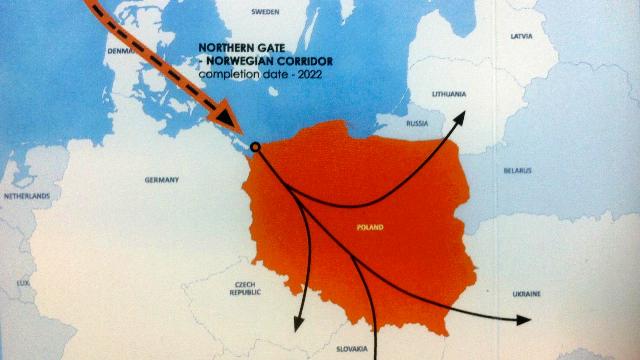
The surprise is the fact that the EC is somehow focused mainly on ensuring the comfort of Gazprom activities on the markets of the EU countries, and do not notice other opportunities that correspond to the fundamental principle of diversification of sources, routes and suppliers. For example, the EC does not put any demands to the Russian Federation to unlock natural gas transit from Central Asia to Europe via Ukraine. The EC doesn't put any questions of the possibility to buy gas from independent producers in Russia, for which Russian gas pipeline monopolist must provide free access to pipeline capacity. There are no steps aimed at creation of attractive conditions of LNG imports from the United States, the first pilot supplies of which has been already started this year. American companies building up capacities of liquefaction and export. The EC did not pay enough attention to the Polish-Norwegian project "Northern Gate", by which gas from the North sea may come to Poland and other countries of Central and Eastern Europe.
https://www.euractiv.com/section/energy/news/poland-puts-hopes-in-northern-gate-gas-pipeline/
All this is somehow beyond the attention of the EC. Under such circumstances, it is obvious that Poland and Ukraine should coordinate their actions against the European Commission. An indicative point will also be whether Poland's partners from the Visegrad group and from the "Group of 10" (countries-signatories of the famous appeal to the EC against the project "Nord stream-2") are willing to support Poland. Under circumstances of extremely uncertain processes in the EU, weakening its institutions, Ukraine should determine the depth of integration in order not to fall under additional excessive dependencies in case of continuation of negative trends in the EU. Principally positive Polish idea of the Energy Union in the framework of the EU is almost doomed to failure. Under the conditions of dominance of influential EU members and ignoration of the interests and protests of others, the Energy Union will become a copy of already created by the EU in 2005 the Energy Community that is a weak and inefficient structure. Therefore, Kyiv and Warsaw should switch into the hard mode while discussing with the EC the energy sector developments in order to prevent possible losses that may be caused by irresponsible actions of Brussels.
By Mykhailo GONCHAR,
President of the Center for Global Studies "Strategy XXI"
Source: http://cacds.org.ua/ru/safe/theme/965


