


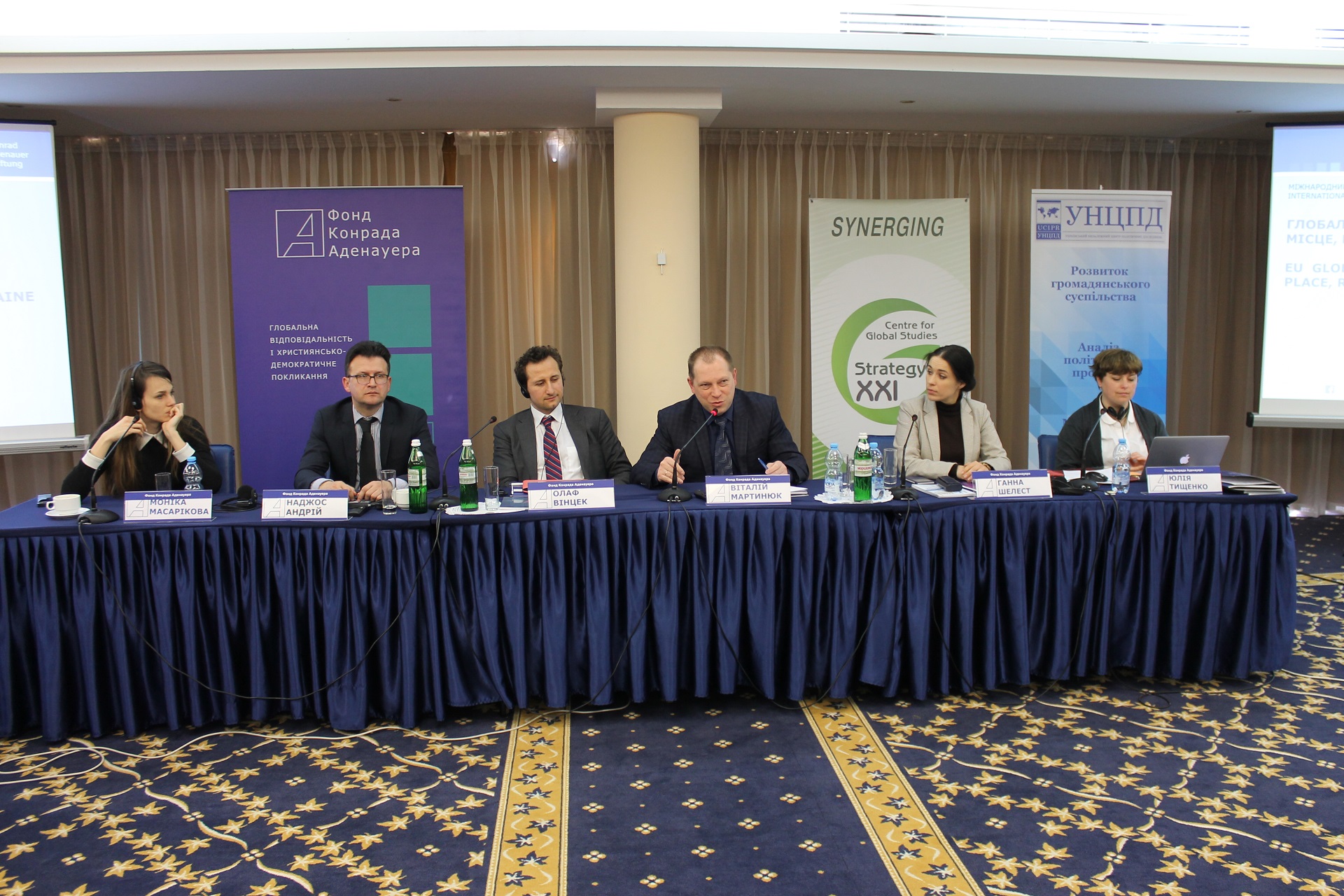
 The event was dedicated to the discussion of the influence of the Global Strategy of the EU on Ukraine and its place and role in foreign and security policy of the EU, as well as development of concrete proposals and recommendations for the EU and Ukrainian leadership on the future directions of Ukraine-EUcooperation in the security sphere.
Head of the EU Delegation to Ukraine, Ambassador Hugues Mingarelli, Head of the European Union Advisory Mission (EUAM) Ukraine Kęstutis Lančinskas, Chief of the Department of the Directorate General for the European Union of the Ministry of Foreign Affairs of Ukraine Andriy Nagios, President of the Centre for Global Studies "Strategy XXI" Mykhailo Gonchar, Scientific Director of the Institute for Euro-Atlantic Cooperation Olexandr Sushko, Head of the Democratic Processes Support Program of the UCIPR Yulia Tyshchenko, Ukrainian and foreign experts participated among others in the discussion.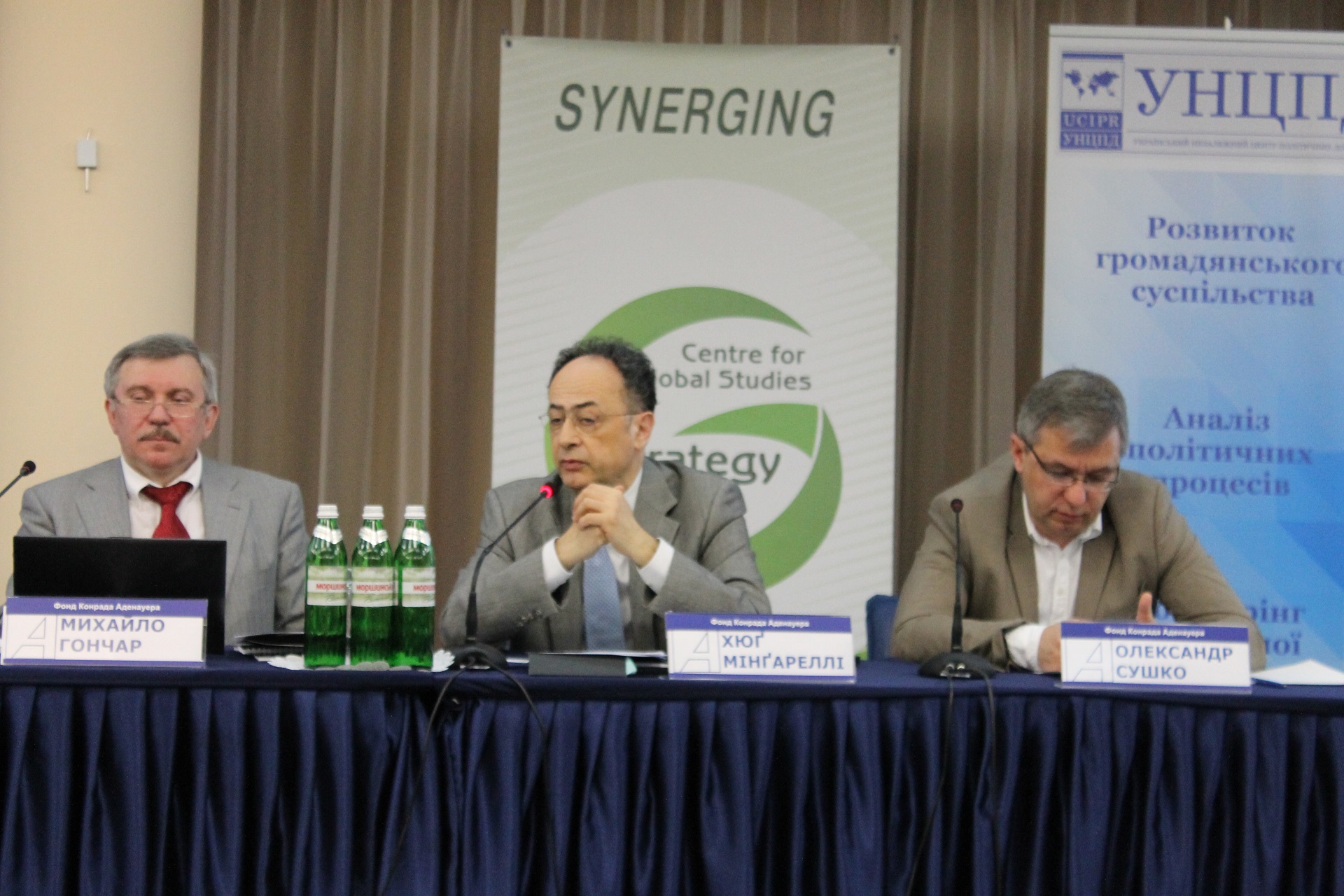
Hugues Mingarelli outlined general contours of the EU Global Strategy and highlighted some aspects of its implementation in Ukraine. He called Ukraine the EU's main partner in the fields of security and economy, and Russia - the main strategic challenge and threat in the Black sea region. The Head of the EU Delegation noted that the European Union should be guided by the basic values and impose on Russia long term sanctions to decrease its military aggression. At the same time, according to Mingarelli, the EU should conduct dialogue with Russia and use diplomatic channels in order to come to common decisions.
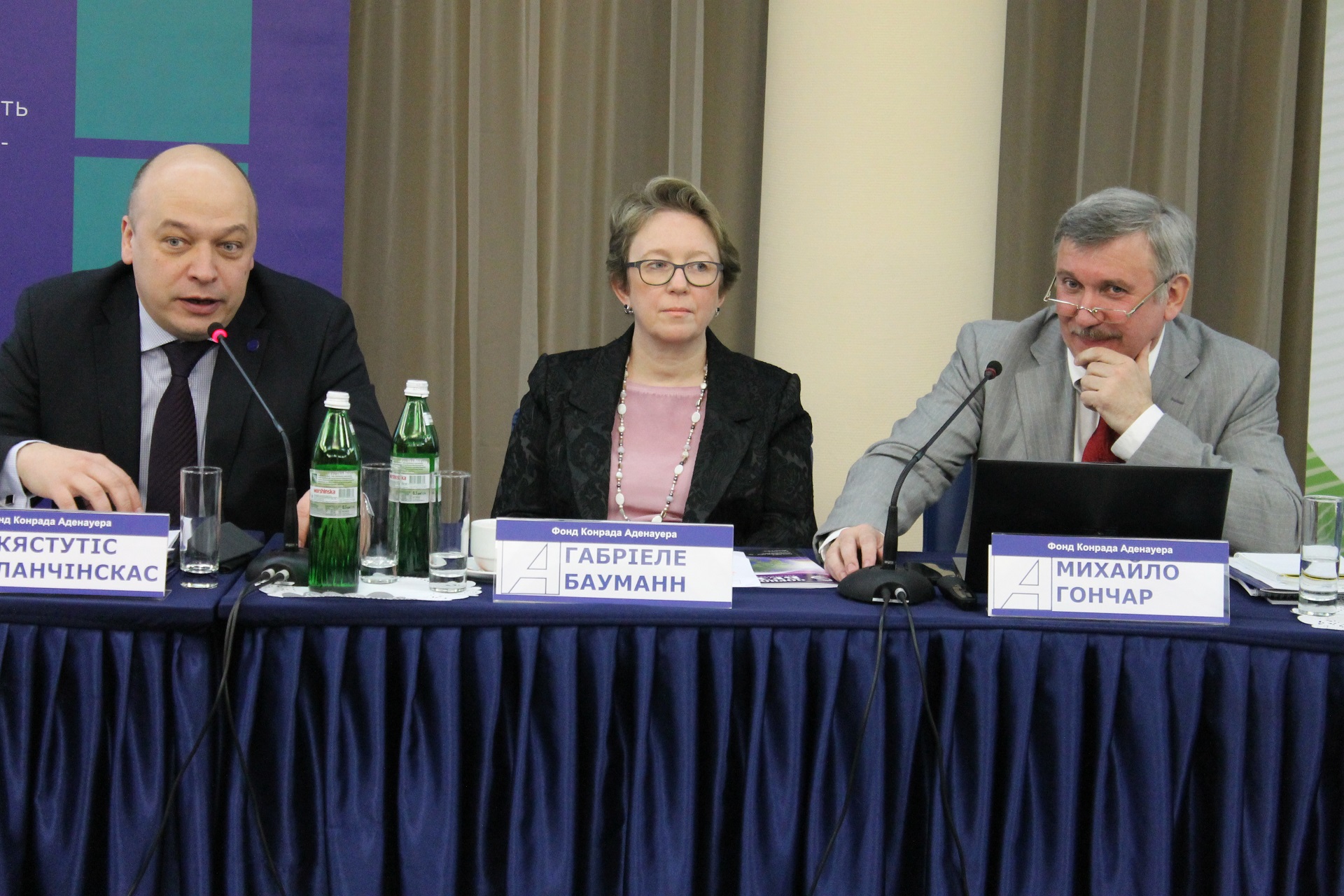 Kęstutis Lančinskas noted that the EUAM Ukraine was a practical demonstration of the implementation of the EU Global Strategy regarding Ukraine, its actual practical use. He outlined key tasks and projects being implemented by the Mission.
The panelists noted the importance of Ukraine for foreign policy and security policy of the EU. With that, experts from the European Union member countries drew attention to the state and prospects of development of security framework of the EU functioning, especially in the East direction. In turn, Ukrainian experts focused more on the role of Ukraine, the opportunities offered by the EU Global Strategy to Ukraine and prospects of further cooperation of Ukraine with the European Union. Herewith, Oleksandr Sushko noted that Ukraine, using the format of the Association Agreement, could build its relations with the EU using the model of Switzerland and Norway.
During the event the results of the expert survey were also presented. According to the results, 59,4 per cent of respondents do not estimate the EU as a global security provider, able to counteract modern threats. About half of the polled (46,9%) noted that Ukraine's integration into the Common Foreign and Security Policy of the EU is at a minimum sufficient level. Experts also do not see any prospects of Ukraine's accession to the EU, and the EU Global Strategy leaves our country only a field for cooperation (75 %). Furthermore, energy (53,1%) and reform of security sector were called the most successful areas of security cooperation between Ukraine and the EU.
Vitalii Martyniuk, Centre for Global Studies "Strategy XXI"


