


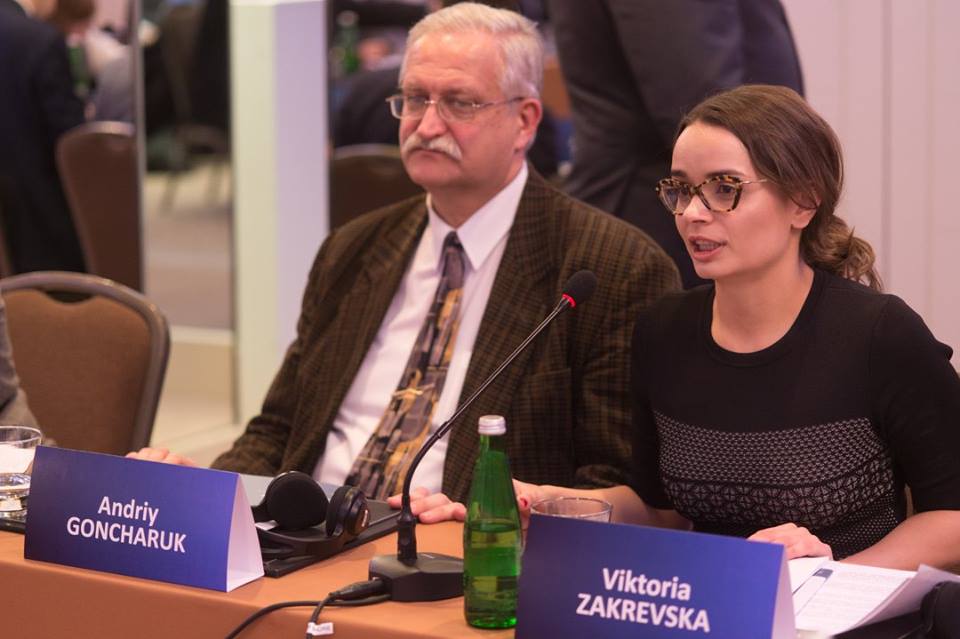
 While preparing the analysis, the experts ranked each foreign policy event - high-profile public statement, meeting, agreement, decision. Following the analysis, such conclusions were drawn up through assessing bilateral relations (here you can see extracts from the shortened version of the conclusions):
Ukraine - the EU:
"For the last quarter of 2016 significant changes in relations between Ukraine and the European Union have not happened. The process of visa regime liberalization occupies a central place in public discussions between Kiev and Brussels, and in spite of previous expectations, will remain unfulfilled in 2016. Some progress has been observed in the process of ratification of the Association Agreement.
 If Ukraine is confused by the delay of visa regime liberalization and ratification of the Association Agreement, the European Union is concerned by the ban on the export of unprocessed timber and by a number of reforms that are moving more slowly than expected. Among the key issues are the reform of the Naftogaz and adoption of laws concerning the electricity market. There is also a problem with ensuring full independence and functionality of anti-corruption bodies. Special concern is associated with legislation that allows the parties to withdraw MPs after the election and with a long delay in the appointment of 12 new members of the Central Election Commission".
Ukraine - the USA:
 "Ukraine-American relations after the presidential elections in the United States exist no more in their classical sense. There were relations between Ukraine and Obama's Administration, as well as there are relations between Ukraine and the newly elected President Donald Trump. There are different backgrounds, different approaches, different atmosphere, but only Ukraine's expectations are the same: if the United States can not protect Ukraine, then at least they should systematically help Ukraine to protect itself.
It is noteworthy that the world assessed much more dramatically the possible consequences of Trump's Presidency for Ukraine than Ukraine itself. Trump's election for Ukrainian government offices was a surprise, but not a knockout.
A clear desire to establish contacts with the new Administration is noticeable. Ukraine, despite the criticism of Obama's administration, is not ready to be isolated from relationship even of that level that it had with US for the past three years..."
Ukraine-Russia:
"The Russian direction was quite intense in October-December 2016. Russia often appeared in the context of internal political scandals: Moscow was suspected in preparation of a special operation to destabilize Ukraine.
 Information resources both in Russia and in Ukraine (especially from the segment that is associated with Pro-Russian political forces) published massively materials the main object of which became the President Petro Poroshenko.
Fighting in Eastern Ukraine was intensified late last year. Neither negotiations in the Normandy format nor yet another agreement on introduction of silence regime after December 24 helped. It is likely that the situation of "neither peace nor war" will occur in the current year, despite the fact that Putin chose the tactics of waiting. First of all, Moscow will try to reach an understanding with Washington, then – with Paris; some hopes Russia put also on a change of the government in Germany".
Ukraine-China:
"The fourth quarter of 2016 in Ukraine-China relations was affected by further economization of bilateral relations. Almost all of the events were in the trade-economic sphere and had the character of identifying further ways of cooperation in various sectors, primarily in the energy sector.
 A significant event of bilateral political relations was participation of the first lady Marina Poroshenko and Ukrainian officials in the First International Ukraine Silk Road Forum-2016 on November 7, 2016.
A milestone in the trade and economic relations between Ukraine and China can be considered the acquisition by the Chinese company Bohai Commodity Exchange Co., Ltd. 99.9% stake in the Ukrainian Bank for Reconstruction and Development from the State Property Fund of Ukraine.
The Ambassador of China in Ukraine Mr. Du Wei on behalf of the State Council (Government) of China signed two agreements with Ukrainian officials in the fourth quarter on free delivery for Ukraine of ambulances and special rescue equipment. This is not only demonstration of friendly attitude by China towards Ukraine, but also a sign of increasing support of Ukraine in the fight for sovereignty and territorial integrity."
Special theme: WINTER of 16/17 - ENERGY ASPECT
"Every heating season for the past ten years was used to discredit Ukraine by a deliberate propaganda campaign that was reinforced by provocative technical manipulation of "Gazprom" and Russian media speculations in the EU. Such propaganda was one of the factors that contributed to implementation of the "Nord stream – 1" and now has been further used to promote its second stage and dispel efforts of Ukraine to reform the national gas market.
 The most obvious proof of reliability of Ukraine as a transit link for the EU is maintaining uninterrupted gas transportation even under circumstances of the armed conflict with Russia and an unprecedented economic and political crises in 2014.
Ukraine is able to continue successful reforms and to be an important partner in the gas sector, but this requires further financial and political support of the EU. In this context, the negative effect has the decision of the European Commission to expand Russian access to the OPAL gas pipeline that is accordingly regarded as a breach of bilateral commitments within the framework of the Association Agreement, in particular, article 274.
Instead, Russia continues to use all the available tools of political, economic and informational measures to harm Ukraine, namely: to disrupt technological regime of GTS functioning through reducing the volume and technical parameters of gas transportation; to undermine economic potential through reduction of incomes from transit, and political dialogue with the EU by spreading negative perceptions of the actions and/or inactions of Brussels."
More details can be found in the shortened version of the “Index of Relations” (in Ukrainian) at the link https://drive.google.com/file/d/0B7i_OSucRX5wVkh4V3lUSUhZc2s/view


